
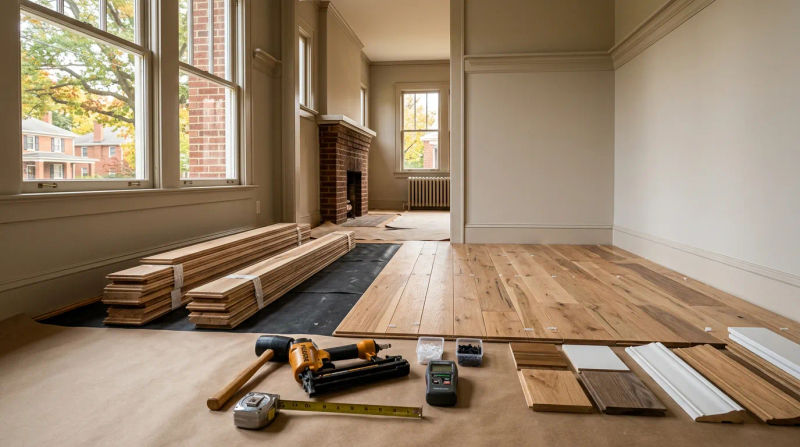
I’m Travis Keene, the lead hands-on builder here at AK Custom Works. For the last dozen years, I’ve been on jobsites around Louisa and Lynchburg, tackling everything from custom builds to detailed renovations. One of the first questions I always get from homeowners is, "What’s this actually going to cost?" It’s the most important question, and you deserve a straight answer.
As the leaves start to fall heavily across Lynchburg this October, many of us turn our attention indoors. It’s the perfect time to plan those renovations you want to enjoy before the holiday season and winter settle in. If new hardwood floors are on your list, understanding the real hardwood install cost is the first step to creating a realistic budget. My goal here isn’t to sell you anything, but to share what I’ve learned from the jobsite so you can plan your project with confidence.
Average Costs in Lynchburg
Let's get right to it. Providing a single price for hardwood installation is tough because every project is unique. However, I can give you a realistic range based on what my team and I typically see in the Lynchburg area. This should help you create a baseline budget.
For a professional installation, you can generally expect the total cost to fall between $8 and $20+ per square foot. This all-in price includes both materials and labor.
Here’s a general breakdown:
- Materials (The Wood Itself): This typically ranges from $4 to $12 per square foot. A standard, pre-finished oak might be on the lower end, while a wide-plank, exotic species like walnut or a custom-milled wood will be on the higher end.
- Labor & Installation: Hardwood floor labor rates Lynchburg usually run from $4 to $10 per square foot. The lower end reflects a straightforward installation of pre-finished planks in an empty, square room. The higher end accounts for more complex work, like installing unfinished flooring that needs to be sanded and finished on-site, intricate patterns like herringbone, or navigating challenging layouts.
So, for a 500-square-foot living room, your budget could range from $4,000 to over $10,000. That’s a wide gap, I know. The next section explains exactly what factors cause that price to swing.
Factors That Affect Price
The final hardwood flooring installer pricing Lynchburg VA depends on much more than just the square footage. These are the key variables I discuss with every homeowner.
1. Type of Hardwood Flooring
- Pre-finished vs. Site-finished: Pre-finished flooring arrives from the factory already sanded, stained, and sealed. This makes for a faster, less messy installation with lower labor costs. Site-finished flooring is raw wood that we install, sand, stain, and seal in your home. This process takes longer and costs more, but it offers complete control over the final color and sheen, and results in a perfectly flat, seamless surface. A site-finished hardwood install budget Lynchburg needs to account for multiple days of work and curing time.
- Solid vs. Engineered: Solid hardwood is one solid piece of wood, top to bottom. It can be sanded and refinished many times. Engineered hardwood has a real wood veneer over a plywood-like core, making it more stable in humid environments like basements. Costs can be similar, but high-end engineered floors can sometimes cost more than standard solid hardwoods.
- Wood Species: Domestic woods like Red Oak, White Oak, and Maple are generally the most affordable. Exotic species like Brazilian Cherry, Teak, or Tigerwood are more expensive due to material costs and sometimes require specialized installation techniques.
2. Condition of Your Home This is a big one, especially in Lynchburg. Our area has a lot of beautiful homes from the 1960s - classic ranches and split-levels. From my experience, these homes often come with unique challenges.
- Subfloor Preparation: The subfloor must be clean, flat, and structurally sound. In older homes, we often find uneven subfloors that need to be leveled, or old particleboard that needs to be replaced. This prep work is critical for a lasting installation and adds to the labor cost.
- Tear-Out and Disposal: Do you have old carpet, tile, or vinyl that needs to be removed? The labor to tear it out and the fees to dispose of it will be part of your quote.
- Transitions and Layout: Split-level homes often have tricky transitions between rooms and levels. Navigating stairs is one of the most time-consuming parts of a flooring job. Complex room layouts with many corners, closets, and angles also require more cutting and precision, which increases labor time.
3. Project Complexity
- Installation Pattern: A standard, straight plank layout is the most cost-effective. More decorative patterns like herringbone or diagonal layouts require significantly more cuts and time, driving up labor costs.
- Trim and Molding: Baseboards and shoe molding almost always need to be removed and reinstalled. Sometimes they need to be replaced entirely, especially if you’re changing the thickness of your flooring. This is a finishing detail that is essential for a polished look.
How to Get the Best Value
Getting the "best value" isn't just about finding the lowest price - it's about getting a durable, beautiful floor that you love for years to come without overpaying. Here are a few practical tips:
- Do Some Prep Yourself: If you're able and willing, you can save on labor costs by moving your own furniture, tearing out old carpeting, and removing baseboards. Just be sure to discuss this with your contractor first.
- Choose Standard Materials: Opting for a classic wood like Red Oak in a standard width (like 2 ¼” or 3 ¼”) is often more budget-friendly than choosing very wide planks or exotic species.
- Bundle Projects: If you're planning to replace the floors in multiple rooms, doing it all at once is more efficient for the installation team and can result in a lower overall cost per square foot than doing it room by room.
- Focus on Quality Installation: A cheap installation can cause squeaks, gaps, and buckling down the road, costing you more in repairs. Investing in an experienced installer who understands how to properly acclimate the wood and prepare the subfloor is the best long-term value you can get.
Questions to Ask Your Contractor
When you get quotes, you're not just comparing numbers; you're vetting the expertise and professionalism of the person you'll be trusting with your home. Here are some questions I recommend every homeowner ask:
- Are you licensed and insured? This is non-negotiable. It protects you and your property.
- What is your process for acclimating the wood to my home? Hardwood needs to sit in the house for several days to adjust to the temperature and humidity. Skipping this step is a major red flag.
- How will you handle subfloor issues if you find them? A good contractor will have a plan and be able to explain the potential costs upfront.
- Is tear-out, disposal, and trim work included in this quote? Get a detailed, itemized quote so you know exactly what you’re paying for. Avoid surprise charges.
- Can I see photos of your previous work or speak to a few references? Reputable installers will be proud to show you their work.
Budgeting for new hardwood floors can feel overwhelming, but it doesn't have to be. By understanding the factors that influence cost and knowing what questions to ask, you can approach your project with a clear plan. The goal is to invest in a floor that not only looks great but also adds lasting value to your home.
For a personalized estimate where we can walk through these factors in your Lynchburg home, feel free to contact my team at Ak Custom Works Llc for a free consultation. We’re always happy to help.